Mould, algae and slip hazards on Australian decks
Green and black films on an Australian deck are a slip problem before they are a stain. Why shade, irrigation and the wet season grow them, and how to clean without wrecking the boards.
By Custom Decking editorial
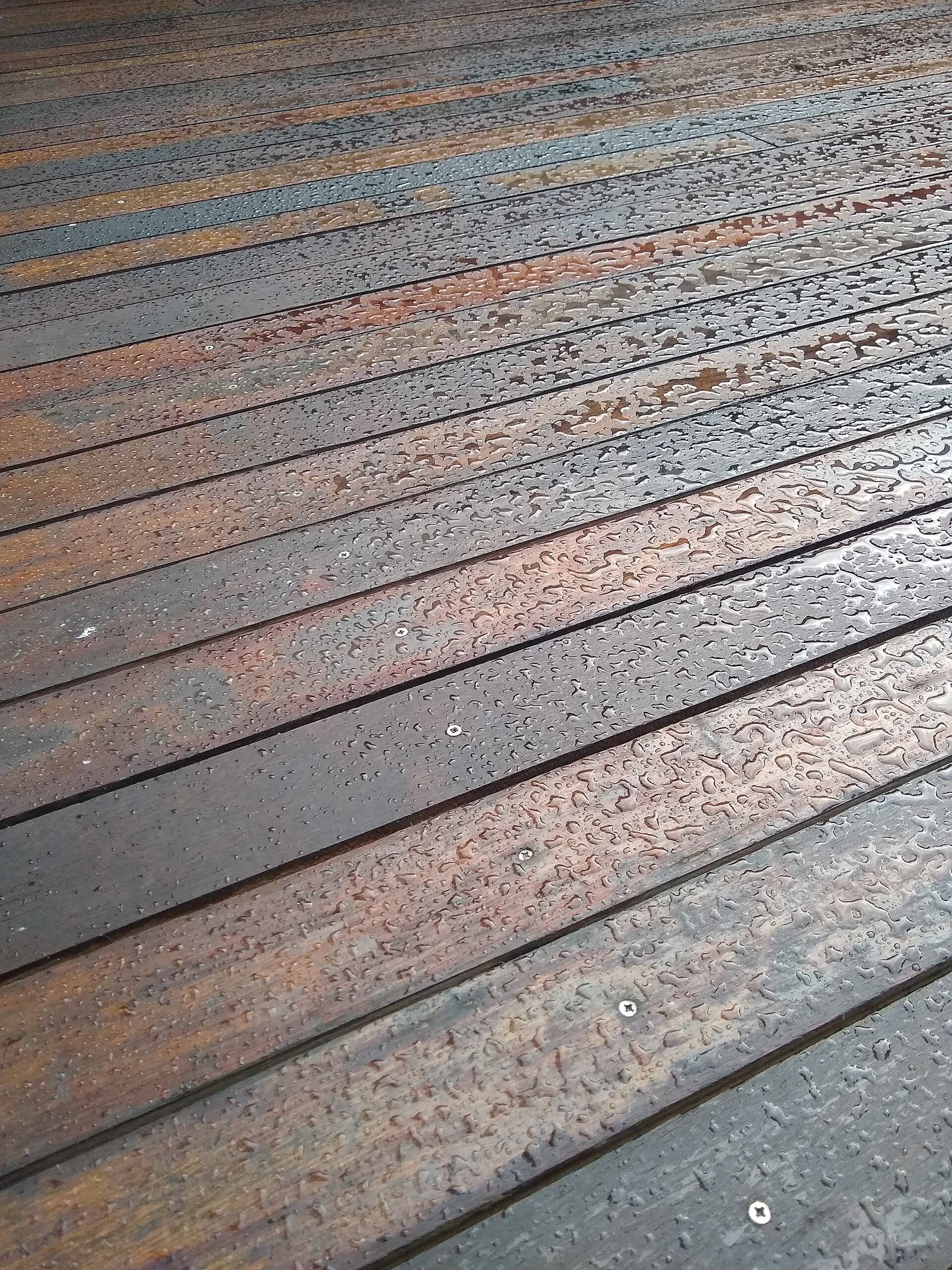
A slippery Australian deck is more often a biology problem than a timber problem. Mould, mildew and algae grow on the face, in the reeded grooves and along the gap where silt sits. They like shade, a regular wet, a warm day and a household that treats the broom as optional. The board underneath can be class 1 heartwood and still put someone on their back at the sliding door. This is a climate and care essay because the climate grows the film and care is how you live with it. It is also a safety essay, which is why we lead with slip and not with colour.
If the timber itself is the question, start in timber and materials with Australian hardwoods and treated pine. If the face is a polymer cap, the same film still grows — composite versus timber is explicit that “maintenance-free” does not mean “never wash”. The oiling cycle after a clean is in oiling and maintaining a timber deck.
What is actually growing
Households say “mould” for almost every dark or green stain. The useful split is simpler than a field guide.
Mould and mildew are fungi on the surface. They read as black, grey or sometimes white speckle, especially on a pale board or on pine in a damp winter. They live on the organic film that sits on timber and on composite alike: pollen, skin, leaf tannin, dust. They do not, by themselves, mean the joist is finished.
Algae are green to black-green and like a regularly wet face — irrigation overspray, a leaking downpipe, a south court that never sees a drying wind, a deck under trees that drip. On a reeded board they fill the valleys. On a smooth board they make a skating rink after dew.
Lichen and moss appear where the deck is more garden than floor: deep shade, constant damp, a board that has not been walked on. They are a detailing problem. Something is staying wet.
Decay fungi are the other category. They eat the timber. They want a board or a joist that cannot dry. Soft, dark, hollow-sounding wood, a fastener that turns in its hole, a face that compresses under a thumb — that is not a wash. That is replacement, and possibly a frame conversation. Do not bleach a rotten joist and call it maintenance.
We will not invent a species list of microbes for your suburb. Identify the condition: surface film, or failed timber. The first is this article. The second is restain, recoat or replace and, if the frame is in the dirt, footings, stumps and posts.
Why Australian decks are good at this
Decks are horizontal, they are outdoors, and they are detailed with gaps that collect seed. That is enough. Add an Australian climate and you get regional manners.
Melbourne and the southern uplands give you a long, damp winter and a south-facing court that may not dry for weeks. Pale blackbutt shows every mark. Pine shows it earlier. A tight side setback between two houses is a mould farm with a street number.
Brisbane, the coast and the wet tropics give you warmth and a wet season. Shade is comfort and a biology gift. Tropical Queensland decks are a ventilation and termite problem first; they are also a slip problem on any week the sun does not reach the boards.
Coastal decks add salt, which holds moisture, and often add a wind that deposits grit. The grit is grip until a film sits on it. Then it is polish. Coastal decks should be read for the metal; this page is for the slime on the metal’s neighbour.
Inland summer can look like a mould holiday. It is not a holiday from dust, tannin splash from river gums, or the first autumn dew on a deck that has not been washed since December. The film arrives when the weather changes. The household notices when a guest does.
Shade, irrigation and the south court
Design grows mould as surely as weather does. A solid roof with no sun strip, a dense pergola over a south deck, a courtyard that is really a light well — those are wet rooms without a floor waste. Shade is still worth having. Bare feet and western sun are a real brief. Just do not specify deep shade and then act surprised at a green face.
Irrigation is the quiet villain. A pop-up that arcs onto the deck every morning is a free algal feed. Drip lines in a planter that overflow at the same board every cycle are a stripe. Move the water. That is cheaper than a cleaner subscription.
Leaves that sit, especially from trees with tannin, stain and then feed. Sweep. A deck is not a forest floor with a warranty. Gutters that dump onto the platform are a drain problem, not a timber one.
Pets and barbecues add organic load. So do outdoor rugs, which hold a wet disc of darkness you only discover when the guests are due. Lift the rug. The film underneath is the one that puts someone down.
Slip, not just stain
Australian residential decks are walked on in socks, bare feet and the first rain of the season. Algal film on a smooth hardwood face is more dangerous than the same film on a reeded face, until the reeded valleys fill and become a set of greasy channels. Composite texture is sold as grip. Texture holds spore and silt. A pale cap shows it. A dark cap hides it until the first wet evening.
This is not a laboratory slip rating and we will not invent one. It is a household fact: if the board is slimy, treat it as a hazard the same day, not as a spring project. Temporary measures are a wash and, if you must have traffic, a warning. Permanent measures are drainage, sun, a cleaner habit, and a surface you can actually keep.
Pool surrounds multiply the problem. Wet feet, sunscreen, and a floor that is allowed to stay wet are how a pretty coping becomes a claims conversation. Poolside decks, drainage and chemicals is the wet-edge file. Do not oil a slimy pool deck and call it grip. Clean it. Then decide whether the surface was the right one.
Stairs and the first board at the door are where people fall. If you only wash one run this month, wash those.
Cleaning without wrecking the timber
Start with the gentle method that works. Sweep the grit so you are not grinding sandpaper into the face. Wet the boards. Apply a deck cleaner the finish manufacturer will tolerate — oxygen bleaches and proprietary deck washes are the usual family — and agitate with a stiff broom, with the grain. Rinse until the gaps run clean. Let the timber dry before you judge the colour. Wet timber always looks worse and always looks darker.
Sodium hypochlorite household bleach is used, and it can lift organic stain. It can also wreck surrounding plants, lighten the timber unevenly, and annoy a warranty. If you use it, dilute as the product says, keep it off the garden, and rinse hard. Do not mix cleaners. Do not invent a stronger dose because last time was slow.
Oxalic acid brighteners pull rust and some tannin stains. They are a stain tool, not a mould tool. Read the label. Wear the gloves. Keep it out of the fish pond.
Pressure washing: a wide fan, well back, no carving of pine earlywood, no driving water up under a flashing or into a wall cavity. Hardwood tolerates more than pine. Composite warranties often have views on pressure and on solvents that cloud a cap. Read the booklet before you rent a machine that can peel a fence.
Do not use a disc sander as a cleaner. You will dish the boards, skip the hollows, and remove wearing thickness you cannot put back. Sanding is for restoration, and only after the film is gone and the timber is dry.
After the wash
A clean, thirsty hardwood face wants oil if oil is the specification. Wait until the boards are dry through. Then a thin maintenance coat, as the oiling essay describes. Washing without recoating is fine if the deck is meant to silver. It is a missed step if the household still wants the honey and the last coat went down the drain with the algae.
Look at the gaps. If they are packed with silt, the next film is already booked. A gap tool, a thin wand, a vacuum — whatever gets the organic plug out without opening the joint into a Toby-the-dog slot. Board width and gap is a construction decision that becomes a cleaning decision for the life of the deck.
Look at the subfloor. If the underside never dries, the top will keep disappointing you. Ventilation, fall and the absence of a garden bed heaped against the frame are structure. Treatment on pine buys time. It does not dry a closed pocket.
Composite, pine and the textured face
Pine grows surface mould readily. It is softer, it holds more moisture in the face, and a neglected pine wearing surface in shade is a slip and splinter combination. Clean it, dry it, and decide whether you are still in an oil cycle or a paint cycle. Painted pine can still grow film on the paint. Wash the paint; do not assume a film-former is a biocide.
Composite does not feed decay the way untreated sapwood does. It grows surface film anyway, especially on a textured cap in Melbourne shade or a Brisbane court that never dries. Use a cleaner the warranty allows. Many booklets void themselves if you reach for the wrong solvent or a fierce washer. The labour changed when you left timber. It did not vanish.
Reeded hardwood is grip when clean and a dirt trap when not. A smooth face is nicer under a chair and more honest about the film — you see it, you feel it, you wash it. Poolside and wet south courts are where texture earns its keep, and only if someone will actually clean the valleys.
Design that dries
Fall on the structure, even a little, so water leaves instead of ponding on a wide board. Open the subfloor to a breeze. Keep soil and mulch off the frame. Cut the irrigation arc. Lift the pots. Thin the vine on the pergola enough that a winter sun strip can work. None of this is a product. All of it is cheaper than a five-year argument with the wearing surface.
If the deck is a permanently wet, shaded slot between two masonry walls, be honest at design time. That is a tile, a grate, or a sacrificial surface — or it is a washing habit the household has to own. Timber can do it. Timber will not do it unattended.
Termite moisture and mould moisture are cousins. A chronically wet junction against the house is a termite inspection problem as well as a slip problem. Do not treat the green face and ignore the dark, wet ledger.
When cleaning is not enough
If the board is soft, replace the board. If the joist is soft, stop decorating. If the film returns in a fortnight no matter what you wash with, fix the water source. If the household will not wash and the climate is a wet shade, change the brief: a different surface, more sun, or a deck that is allowed to look like a garden.
A slippery deck is not a character feature. It is a Saturday morning with a broom, or it is a drawing that never dried. Clean it as if someone you like will run for the door in the first rain, because they will. Corrections to a method or a product warning go through contact. We edit to editorial standards, not to a cleaner advertisement. The wet boards on this page are credited on image credits.
Questions readers ask
- Is the green film on my deck rotting the timber?
- Usually not, if the boards are a durable species and the structure can dry. Surface mould and algae live on dirt, pollen and moisture on the face. They make the deck slippery and ugly. Decay is a wet, soft board that has stayed wet in the wrong durability class. Clean the film; then check whether the timber underneath is still sound.
- Will a pressure washer fix a slippery deck?
- It can strip the film and it can also strip the earlywood, open the grain and drive water into the joints. Use a wide fan, keep your distance, and prefer a cleaner plus a broom on pine and on any board you still intend to oil. The washer is not a substitute for fixing the shade, the sprinkler or the drain that grew the film.
- Do I need to oil after cleaning mould off a timber deck?
- If the deck was an oiled hardwood and the wash has taken the last of the coat, yes — once the timber is fully dry. Cleaning without recoating leaves a thirsty face that weathers faster and can pick up the next film sooner. If the deck is meant to silver, clean and let it dry, and do not invent an oil job the household never wanted.
Keep reading
Related essays
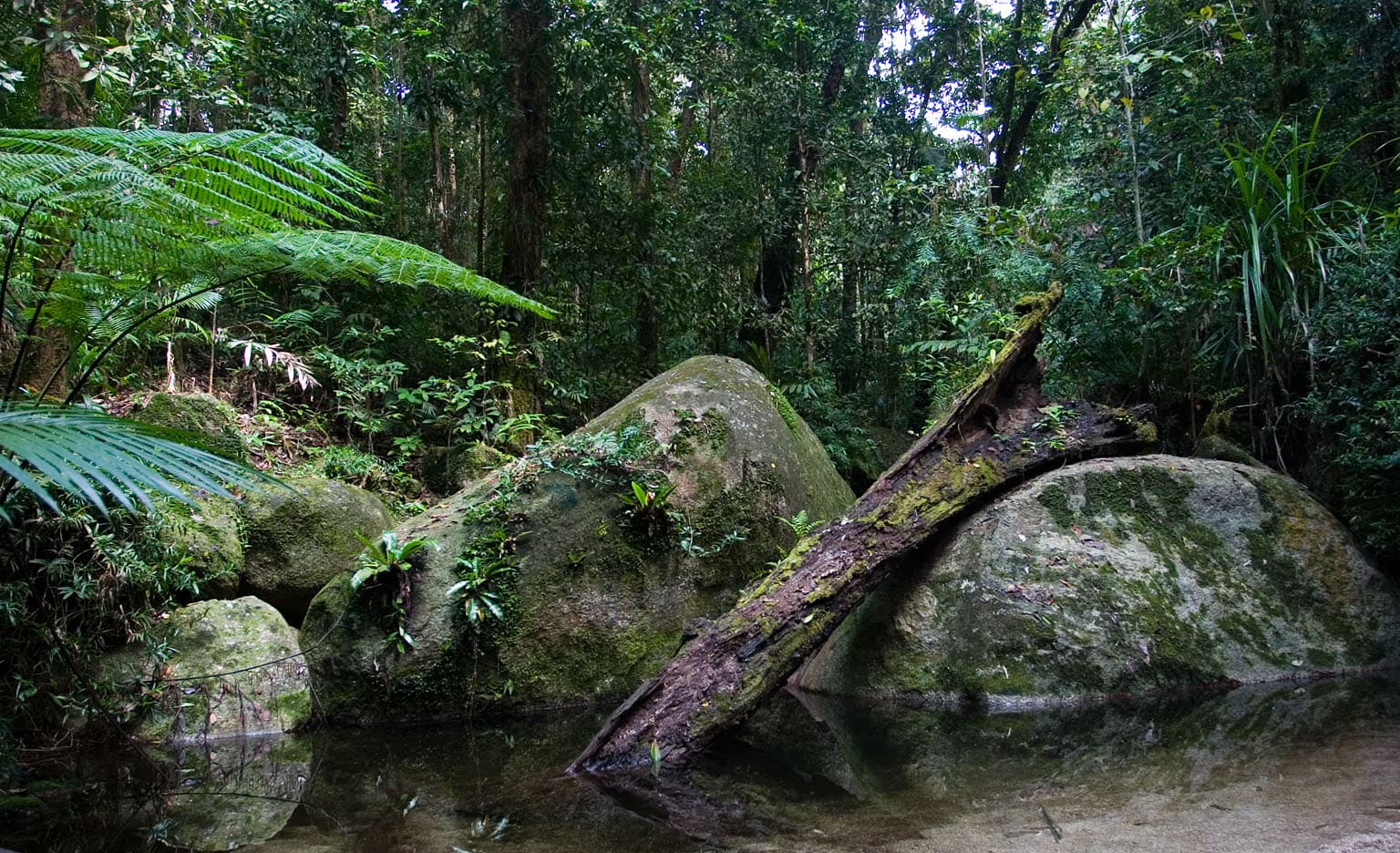
Termites and deck construction in Australia
A deck is a bridge to the house if you detail it that way. How Australian termite management, inspection zones and timber choice actually meet a custom deck — without treating a species as a system.
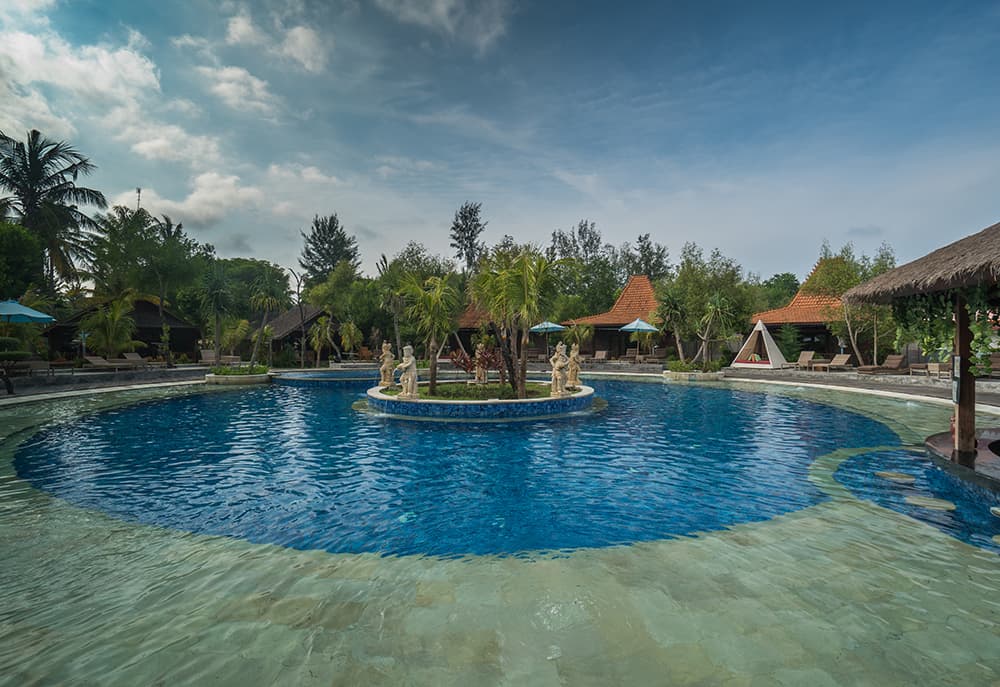
Poolside decks: drainage, slip resistance and chemical splash
A deck beside an Australian pool is a wet edge. Drainage, grip under a wet foot, and what chlorine or salt does to timber, fasteners and finishes — before the coping photograph.
Tropical decks in Queensland: ventilation, termites and the wet season
A deck in the Queensland tropics is a wet-season structure. Ventilation, termite management, species and the dry-season oiling window matter more than a southern maintenance calendar.