Termites and deck construction in Australia
A deck is a bridge to the house if you detail it that way. How Australian termite management, inspection zones and timber choice actually meet a custom deck — without treating a species as a system.
By Custom Decking editorial
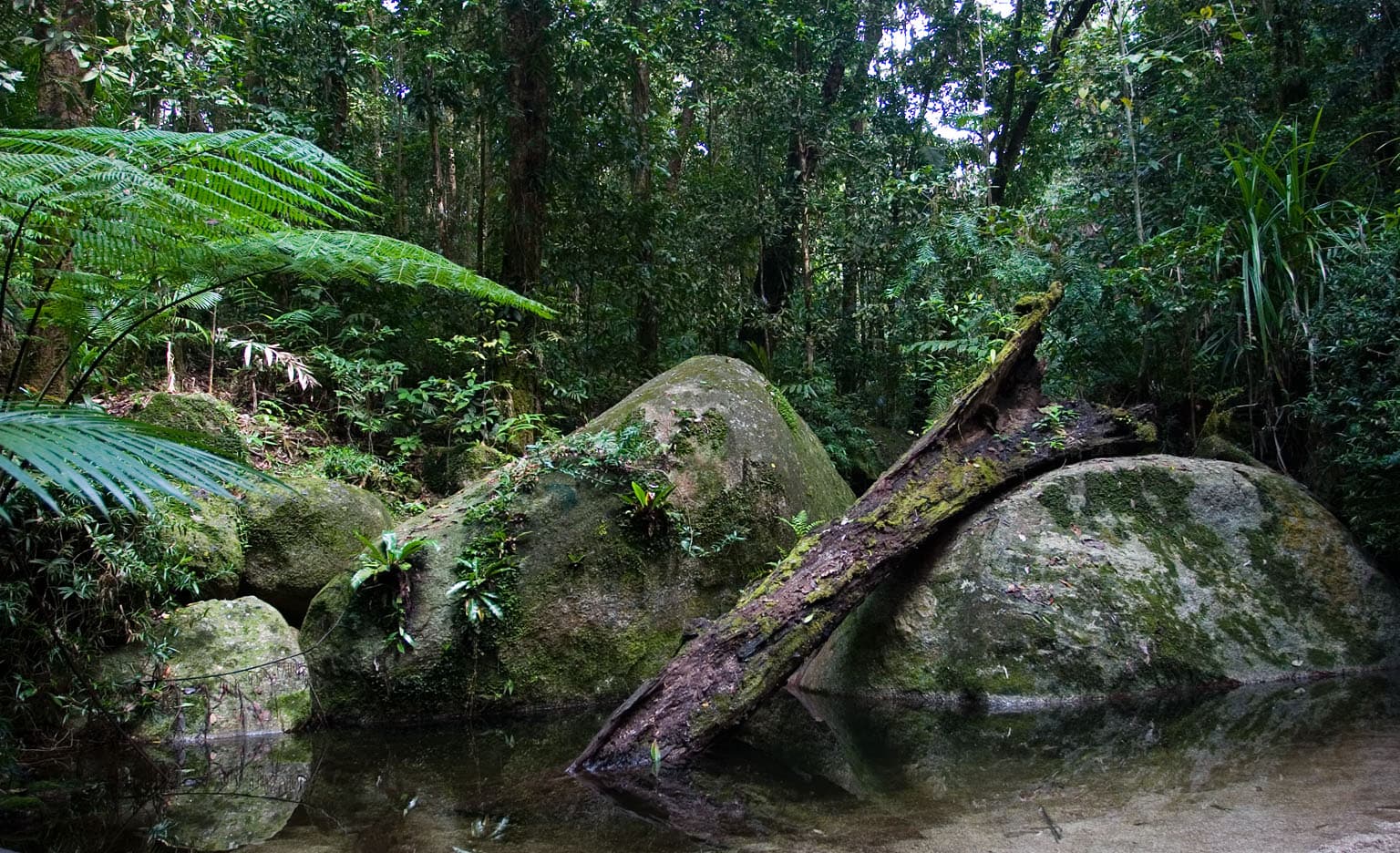
Termites do not care that the wearing surface is spotted gum, that the pine is green, or that the household oiled in April. They care about a dark, damp, undisturbed path from soil to food. An Australian deck is very good at offering that path if it is detailed as a pretty box against the house, closed to the breeze, with a garden bed along the ledger and a pile of firewood underneath. This is a climate and care essay because moisture and inspection are how you live with a pest that is already on most of the mainland. It is also a construction essay, which is why the structure hub sits next to it.
Species still matters, as timber, on the materials desk — Australian hardwoods and treated pine. Posts still matter, as a ground junction, in footings, stumps and posts. What follows is the pest as a design load, not as a spray you buy after the barbecue is booked.
What termites want from a deck
Subterranean termites — the usual structural problem in this country — live in contact with soil moisture and travel to wood. They build shelter tubes over materials they cannot eat. They exploit a wet join, a crack, a cavity, a slab edge that was never inspectable, a timber-to-ground contact someone called a detail. A deck offers them: posts or stumps in or near soil; a dark subfloor; a ledger or flashing line against the house; a set of moist joists if the underside never dries; and, if you are unlucky and lazy, a direct timber bridge into the wall frame.
Drywood termites exist in parts of Australia and are a different habit. They do not excuse you from the subterranean conversation on a mainland house. We will not turn this page into an entomology text. Identify the risk as: can they reach the house through this deck, and can anyone see?
A coastal or tropical site adds moisture and often adds a more serious pressure. Tropical Queensland decks are explicit that the wet season is a termite season with rain attached. A dry inland slab can still host a colony if the irrigation and the detailing are wrong. Geography changes the odds. It does not repeal the junction.
AS 3660 and the NCC, said plainly
The National Construction Code requires termite management in areas where subterranean termites are known to be a risk. That is most of the mainland and is not a Sydney-versus-Perth folk argument. AS 3660 is the Australian Standard family that describes systems: physical barriers, chemical barriers, and the combination and inspection regime that makes them a system rather than a product.
We will not precis the whole standard here. We will say what a deck does to it.
A house that already has a barrier — a stainless mesh, a graded particle layer, a chemically treated zone, an exposed slab edge that is actually exposed — can have that barrier broken by a later deck. A post beside the slab, a garden bed that hides the edge, a timber stair that lands in soil, a ledger bolted through a wet cavity, a paved over inspection zone — those are how a compliant house becomes a bridged house. The deck builder is in the termite file whether they like the specialisation or not.
New work should name the system, the installer, and how the deck preserves inspection. “Builder to allow for termites” is not a specification. It is a shrug.
Physical barriers, chemical barriers and inspection
Physical barriers are materials termites cannot get through without being seen: certain meshes, certain graded stones, an exposed concrete edge with the right geometry. They fail when you cover them, puncture them, or build a timber path around them.
Chemical barriers are treated soil or other treated zones that termites are reluctant to cross. They fail when you trench them for a pipe, when you disturb the soil for a footing and do not reinstate the system, when the product’s life and conditions are ignored, or when the household treats the perimeter as a garden redesign every second autumn.
Inspection is the part households skip because it is unglamorous. An inspection zone is a clear, visible strip where tubes would have to show. If the deck hides that strip behind a screen, a planter, or a skirt to the soil, you have deleted the system’s eyes. Decorative screening is compatible with inspection only if it can be opened and if airflow remains. A locked pretty box is a gift.
Regular inspections by someone who knows what they are looking at are part of the system you bought. We will not invent a single interval for every product and every climate. The manager’s advice and the barrier’s documents lead. After a wet season, a leak, a new garden bed, or a new structure against the house, do not wait for the calendar.
Posts, stumps and the ground
Timber in the ground is a meal if it is untreated or under-treated, and it is still a highway if it is treated and the rest of the house is not. Footings, stumps and posts is the structural file. The termite file adds: keep a dry, visible junction; prefer a stirrup or a steel post that breaks the timber-to-soil line; do not bury H3; do not hide the post top in a wet planter.
A concrete footing is not automatically a barrier. Termites go around concrete. They go through cracks. They go in the joint between a post and a poorly finished haunch. The footing must be part of the house system, or it must leave the inspection intact.
On-ground and near-ground decks are the hard case. They are popular on tight urban lots and they are difficult to inspect. If you build one, you owe the house a barrier strategy that does not depend on seeing a subfloor you did not provide. That usually costs more than the pretty low platform suggested.
The ledger and the house
The attached deck is the termite conversation most likely to end in a claim. A ledger bolted to a house wall, flashed badly, holding moisture, with cladding or render that hides the junction, is a bridge and a damp trap. Detached decks — an independent structure with a gap and a flashing that does not invite a tube into the cavity — are easier to defend, and they are not always what the household wants.
If the deck is attached, the waterproofing of that ledger is a building problem, not a finish problem. Termites follow moisture. A wet ledger is both decay and pest. Do not face-fix through a membrane. Do not seal a cavity you cannot see. Do not build a step that lands the garden against the wall plate.
A deck that becomes a roof over a path along the house can keep a strip of soil permanently damp. That is a climate you installed.
Species is not a system
Class 1 heartwood is durable. Termites still test it, and they still walk over it to reach the kitchen framing. Sapwood of almost every hardwood is not durable and is not a barrier. A cheap parcel with pale ribbons is a shorter board and an easier nibble.
Treated pine includes insecticide. It is still not the house system. Termites tube over treated members. They eat untreated offcuts left in the soil. They eat the house.
Composite does not feed them the way timber does. The joists under a composite board usually do. The house behind the ledger still does. Do not buy a polymer cap as a termite strategy.
Bushfire-resisting species listed in AS 3959 are a fire conversation, not a pest one. Bushfire BAL ratings and deck design can change the timber and still leave the termite junction to be drawn. Councils may ask about both overlays on the same lot; approvals is the process file.
Moisture, mould and the closed subfloor
Termite moisture and decay moisture are cousins. A subfloor that never dries, a leaking downpipe, irrigation against the frame, a pool deck that stays wet — poolside decks and mould, algae and slip are the surface symptoms. Underneath, the same water is a pest climate.
Ventilate. Fall the ground away from the house if you can. Keep mulch and soil off timber and off inspection edges. Do not store firewood, offcuts or cardboard under the deck. Do not run a permanent drip against a post.
Coastal salt does not kill the colony. It does corrode the fasteners and the mesh you were relying on if you specified the wrong alloy; coastal decks is the metal file. A failed physical barrier that nobody can see is a theoretical barrier.
After handover
Write the system into the household file: who installed it, what it is, where the inspection zone is, what must not be buried, and who to call. Show the next gardener. Show the next carpenter who comes to add a stair. Most bridging happens in year three, with a kind improvement.
Oiling does not treat termites. It can keep the wearing surface honest while the frame is being eaten at the ledger. Do not let a pretty face delay an inspection.
If you find mudding, hollow timber, or a door that suddenly sticks along a wet wall, stop decorating. A licensed inspector, then a builder who will open the junction, is the sequence. Restain, recoat or replace is a finish diagnosis. Termite damage is a structure diagnosis that may include finish.
Repair can be local if the attack was caught and the bridge is removed. Rebuild is the honest verb when the joists are galleries and the house framing is in the file. There is no stain that closes a gallery.
Specifying a deck that can be inspected
On the quote, write: attached or detached; how the house barrier is preserved or reinstated; the inspection zone and how it stays visible; post and footing type; hazard class of any pine in or near ground; species and heartwood of the wearing surface; and the inspection arrangement after handover. Then walk the subfloor before the screens go on. If you cannot see the slab edge or the post junction, stop.
A custom deck should not be the cheapest path into the house. Durable timber, treated pine, composite, a pergola that shades the plane — none of those is a substitute for a system you can still see in five wet seasons. Build the deck as if someone will have to look, because someone will, and the alternative is looking from inside the wall. If a standard, a mapped zone or a product claim in this piece is out of date, send the document through contact. We correct against the NCC and AS 3660, not against a yard reassurance. The rules are on editorial standards. The rainforest photograph is credited on image credits.
Questions readers ask
- Will a hardwood deck resist termites on its own?
- Durable heartwood is less appealing and lasts longer, but it is not a termite management system for the house. Most of mainland Australia still wants a managed system under the NCC and AS 3660. The boards can be class 1 and the ledger can still be a bridge into untreated framing.
- Is treated pine termite-proof?
- Treatment includes an insecticide and a fungicide, and it helps the pine. It does not make the deck a barrier. Termites can build around a treated member, tube over it, or eat what the treatment never reached. The house still needs a system, and the deck still needs to be inspectable.
- How often should a deck be inspected for termites?
- Follow the manager and the system you actually installed — often annually, and after events that change the moisture, the garden or the structure. We will not invent a single national interval that overrides the label on your barrier or the advice attached to your house. If you cannot see the inspection zone, you do not have an inspection.
Keep reading
Related essays
Poolside decks: drainage, slip resistance and chemical splash
A deck beside an Australian pool is a wet edge. Drainage, grip under a wet foot, and what chlorine or salt does to timber, fasteners and finishes — before the coping photograph.
Tropical decks in Queensland: ventilation, termites and the wet season
A deck in the Queensland tropics is a wet-season structure. Ventilation, termite management, species and the dry-season oiling window matter more than a southern maintenance calendar.
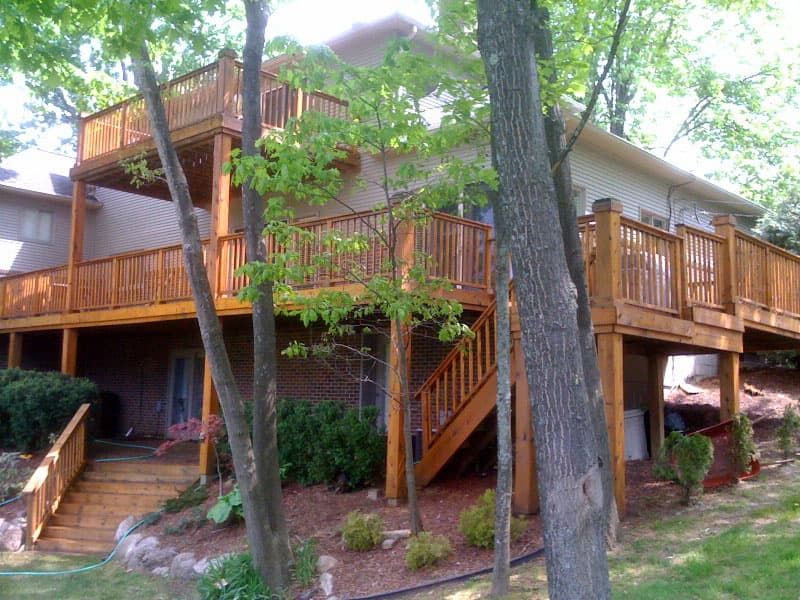
Restain, recoat or replace: deciding the next life of a deck
A tired Australian deck is three different jobs — a new stain, a new film, or new boards. How to tell which one you are actually in, and when the frame is the problem.